Release basis
Confirm the drawing/model revision, material or resin identity, quantity, finish, delivery basis and open technical dispositions before manufacturing release.
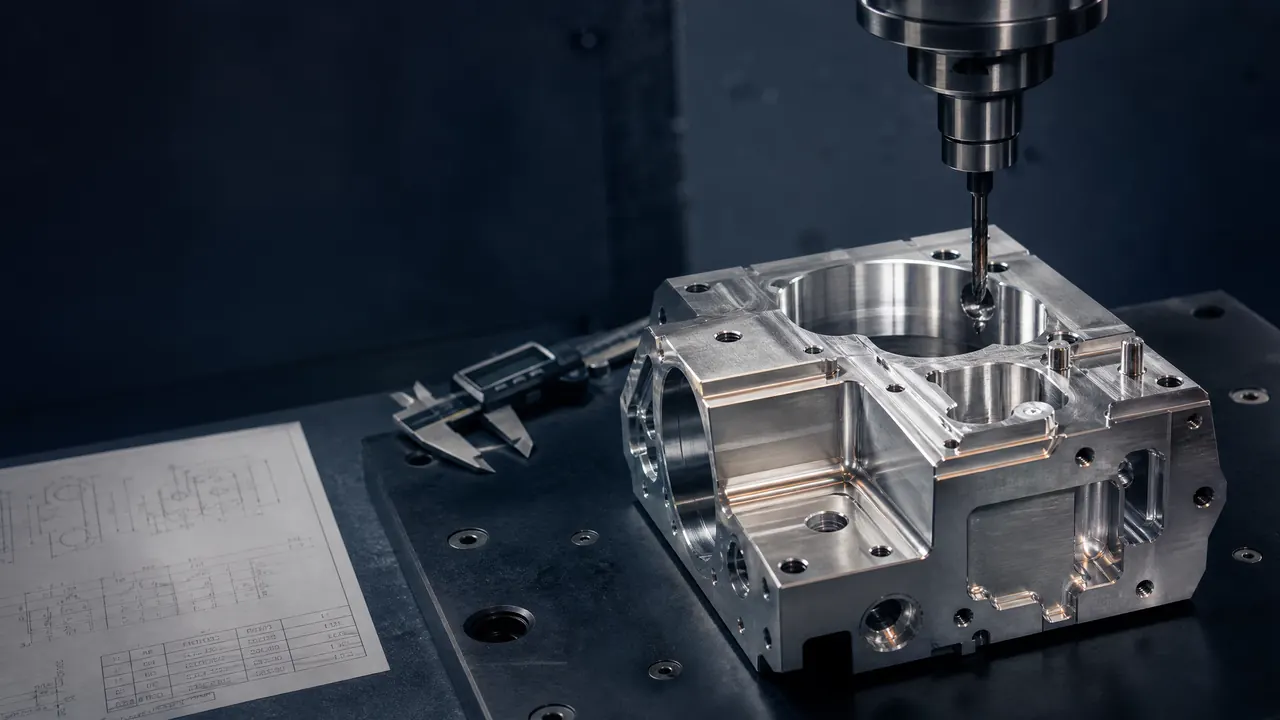
Precision machining
PartVerity coordinates drawing review, process-fit supplier selection, production follow-up and inspection evidence for custom milled and turned parts.
Process control
Every CNC project starts with the accepted model and drawing revision. We align the manufacturing route, material, critical characteristics and inspection method before production release.
Drawing and model review
Material and critical-feature confirmation
Machining-route and supplier selection
DFM closure and production release
First-off or first-article review where specified
Dimensional inspection and controlled release
Materials
The examples below indicate common project families, not permission to substitute a specified grade. Availability, origin, certification and traceability requirements are confirmed in the quotation basis.
6061, 6082, 7075
Drawing-specified machinable grades
303, 304, 316 and project-specific grades
Brass and selected copper grades
POM, PA, PC, PTFE, PEEK and specified polymers
Tolerance approach
Unspecified dimensions may be quoted on an ISO 2768-m basis when appropriate. Tighter geometric or dimensional requirements are reviewed feature by feature against geometry, material, process, inspection method and volume. The accepted drawing revision and agreed inspection plan remain controlling.
Lead-time planning
Simple prototypes and low-volume batches may be planned from approximately 7–15 business days after DFM closure, material confirmation and order release. Production batches commonly require approximately 3–6 weeks. Geometry, raw material, finishing, inspection and logistics determine the committed schedule.
Manufacturing in China
For engineering and procurement teams sourcing CNC machining in China, the main risk is rarely the cutting operation alone. Material identity, drawing interpretation, revision discipline, process capability and inspection evidence all influence whether the delivered custom machined parts are usable.
PartVerity provides one European project interface for CNC prototypes, low-volume machining and repeat production. We structure open technical questions before supplier release and connect the inspection scope to the features that matter for fit, function and assembly.
Final capability, tolerance, material documentation, inspection scope and timing are confirmed per drawing and project—not by website copy alone.
Decision-stage engineering
Each gate connects the accepted requirement to a named reviewer, a project record and an explicit decision. These controls describe the coordination model; the project quotation defines the actual scope.
Confirm the drawing/model revision, material or resin identity, quantity, finish, delivery basis and open technical dispositions before manufacturing release.
Identify the characteristics that drive fit, function, appearance or assembly and agree how, when and by whom their evidence will be reviewed.
Keep DFM proposals, substitutions, deviations, rework and schedule effects attached to a numbered request and authorised response.
CNC engineering resources
Use these focused guides to close process route, tolerance, material, finish and DFM questions. Every guide links back to this commercial CNC owner and to a context-preserving RFQ route.
Frequently asked questions
Answers state the coordination basis without promising universal capability, timing or acceptance.
Provide the controlled 3D model, drawing revision, material and condition, quantity, finish, critical characteristics, inspection requirements and required delivery point. Missing inputs are recorded as RFQ questions rather than assumed.
No. Tolerance capability is reviewed feature by feature against geometry, material, setup, process route, quantity and measurement method. The accepted quotation and inspection basis govern the project.
The exact grade, condition, governing specification and required certificate or lot traceability are defined before release. Any proposed substitute remains a documented change request until authorised.
Start a controlled RFQ