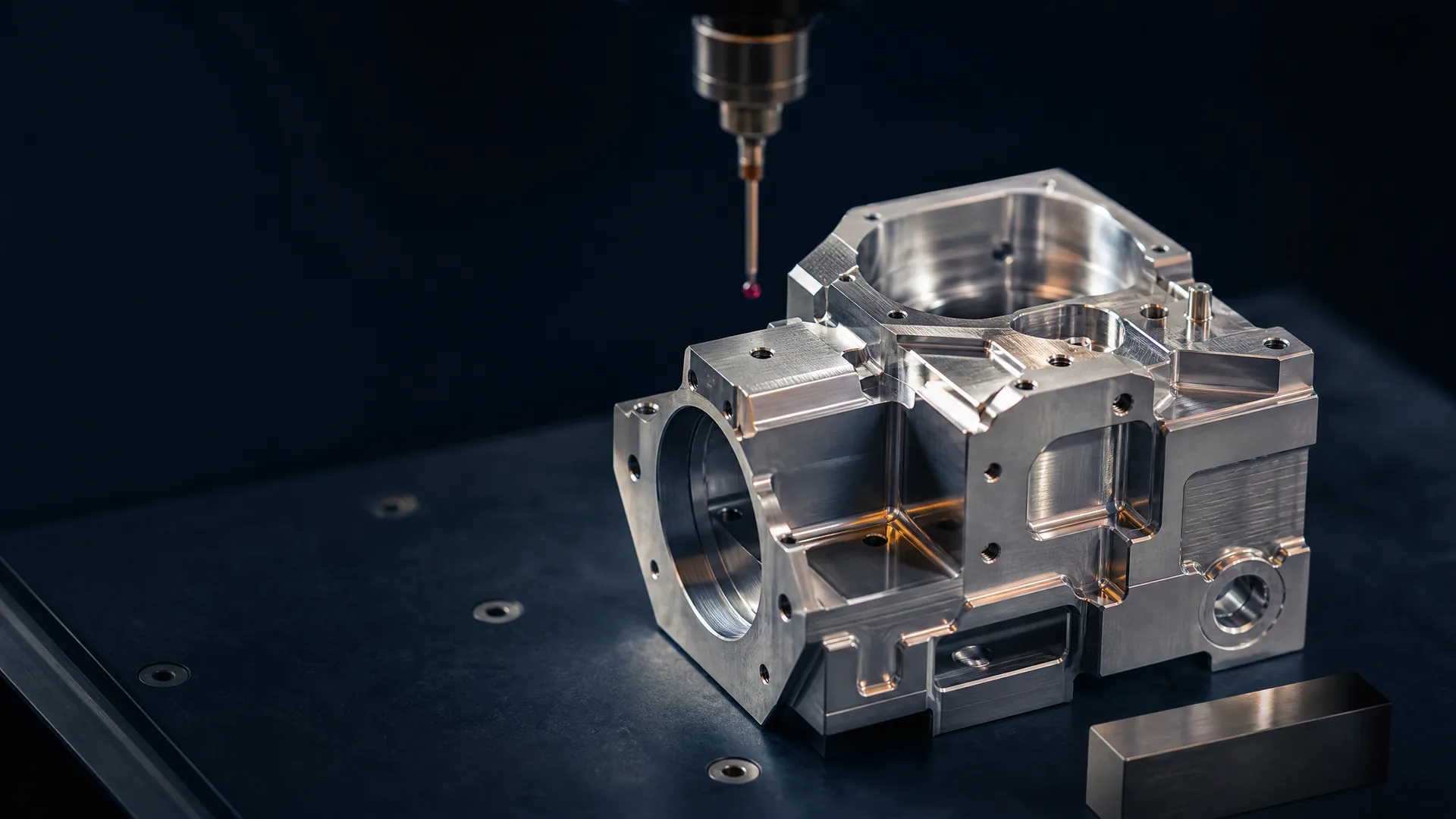
Controlled custom manufacturing project with precision machined component

Custom manufacturing in China

One controlled route from drawing to delivered parts.

PartVerity coordinates requirement closure, process-fit supplier selection, production gates, inspection evidence and delivery through a European project interface operated by Kopintra Industrial Group.

Commercial fit

Built for drawing-led projects where control matters.

The model is most useful when manufacturing decisions must remain connected to revisions, measurable acceptance criteria and a defined delivery basis. It is not positioned as a universal buying route for every part.

A strong fit

Custom parts defined by CAD, drawings, samples or controlled specifications.

Prototype, low-volume or repeat production requiring a visible technical decision trail.

Projects where material identity, critical features, tooling, inspection or supplier choice affect usable outcome.

European engineering and procurement teams that want one accountable coordination point.

Usually not the right fit

Catalogue products that can be bought more efficiently from an authorised distributor.

Requests without sufficient product definition or authority to resolve contradictory requirements.

Projects selected only on the lowest initial price while excluding required inspection, documentation or change control.

Regulated or safety-critical work where the required approvals, certifications or qualified process chain cannot be demonstrated for the specific project.

Responsibility matrix

Clear ownership before work crosses borders.

PartVerity coordinates the project and evidence flow; the customer retains product-design authority and the selected manufacturing partner executes the released production route. Project-specific commercial agreements remain controlling.

StageCustomerPartVerity project controlManufacturing partner
Product definitionDesign intent, approved drawings and functional prioritiesClarify contradictions and control the accepted RFQ basisReview manufacturability against the released definition
Manufacturing routeApprove material or process changesCompare route and supplier fit; document assumptionsPropose and execute the agreed process
ProductionRespond to agreed technical decisionsTrack milestones, revisions and approved changesManufacture to the released project basis
InspectionIdentify critical characteristics and acceptance needsAlign evidence to the inspection scope and review release statusMeasure, record and contain non-conforming output
DeliveryConfirm destination and receiving constraintsCoordinate release information and shipment handoverPack and provide agreed production documentation

Project gates

Progress is released by decisions, not assumptions.

The exact evidence and approval authority depend on the drawing, process and commercial agreement. These gates provide the control spine for the project.

01

Requirement closure

Models, drawings, revision, material, quantity, finish, inspection and delivery basis are reconciled before supplier release.

02

Route and supplier fit

The manufacturing route is matched to geometry, material, tolerance, volume, validation needs and the supplier's relevant process capability.

03

Commercial alignment

Quotation scope, exclusions, tooling, documentation, logistics basis and change assumptions are made visible before an order is placed.

04

Production release

Open DFM items are closed and the accepted revision is identified before production or tooling work is authorised.

05

Inspection release

Requested evidence is reviewed against the agreed plan. A report is not treated as acceptance when it omits a critical characteristic.

06

Delivery and close-out

Shipping documents, packaging basis, outstanding deviations and repeat-order information remain linked to the project record.

Risk-control rules

Controls that protect the accepted project basis.

01

No silent material substitution

02

No production against an obsolete revision

03

No automatic release because parts are complete

04

No tolerance promise without feature-level review

05

No factory claim accepted without project-relevant evidence

06

No change hidden inside an email chain

Process routes

Choose the manufacturing question, then the process.

Each commercial owner page explains the process-specific DFM, material, tolerance, inspection and timing considerations. The RFQ route remains shared so multi-process projects do not fragment.

Start with the controlled basis

Share the drawing, material, quantity and critical requirements.

Start an RFQ