Release basis
Confirm the drawing/model revision, material or resin identity, quantity, finish, delivery basis and open technical dispositions before manufacturing release.
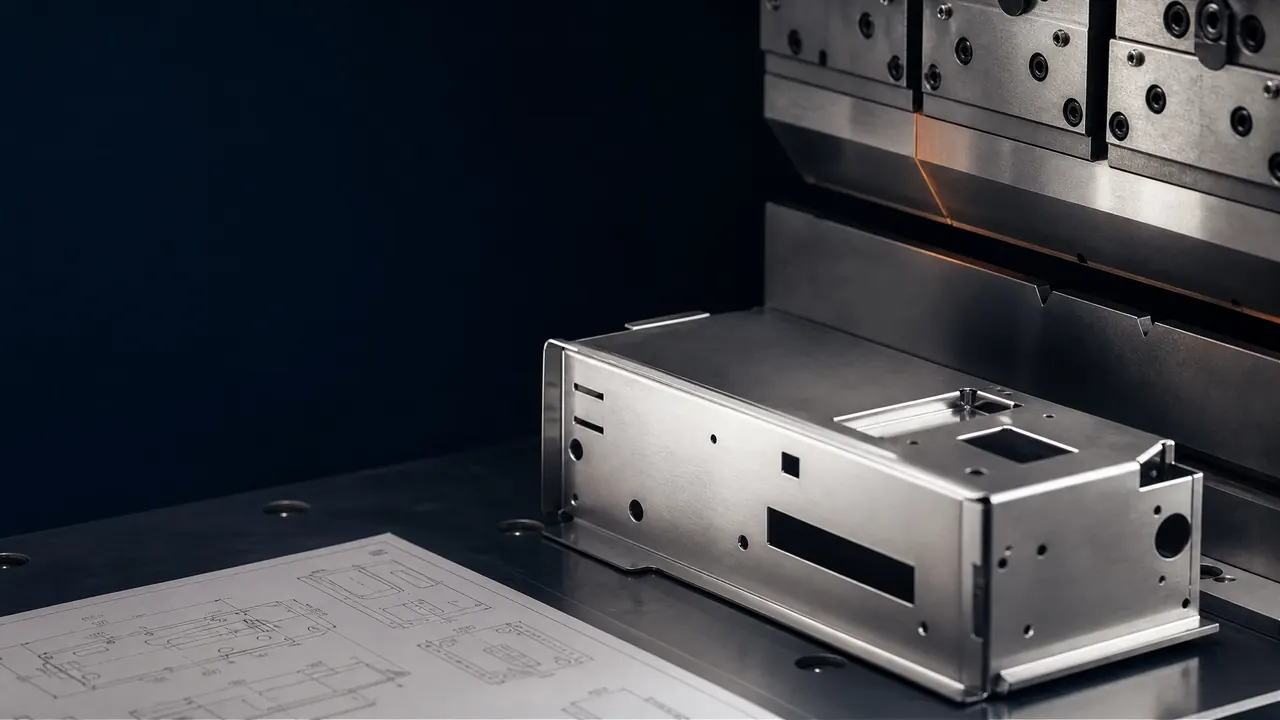
Fabricated assemblies
Coordinate laser-cut, formed, welded and finished sheet metal parts through one European project interface and a process-matched manufacturing route in China.
Process control
The project review covers flat patterns, bend radii, reliefs, datum strategy, weld symbols, hardware, cosmetic surfaces and finishing requirements before a manufacturing route is released.
Flat-pattern and drawing review
Bend, weld and hardware DFM
Cutting and forming route selection
Fixture and first-off planning
Fabrication and finishing control
Assembly and dimensional inspection
Materials
The examples below indicate common project families, not permission to substitute a specified grade. Availability, origin, certification and traceability requirements are confirmed in the quotation basis.
Common cold-rolled and hot-rolled sheet grades
304, 316 and project-specific sheet grades
5052, 5754, 6061 and project-specific grades
Copper and brass sheet where process fit is confirmed
Tolerance approach
Unspecified linear dimensions may be quoted to an agreed general-tolerance standard. Bend location, angle, flatness, hole-to-bend relationships and welded assemblies are reviewed separately because material condition, thickness, tooling, heat input and finish influence capability. Critical features must be identified on the drawing.
Lead-time planning
Simple prototype fabrications may be planned from approximately 7–15 business days after DFM release. Repeat or production assemblies commonly require approximately 3–6 weeks, excluding exceptional tooling, qualified welding, complex finishing or logistics.
Manufacturing in China
Sheet metal fabrication in China can combine laser cutting, punching, bending, welding, hardware insertion, machining and finishing in one supply route. The project-control challenge is to keep all of those steps aligned to the same drawing revision and acceptance criteria.
PartVerity coordinates custom sheet metal parts and assemblies around manufacturability, cosmetic surfaces and measurable release conditions. The result is a clear route from RFQ to finished fabrication without relying on fragmented email threads between multiple process suppliers.
Final capability, tolerance, material documentation, inspection scope and timing are confirmed per drawing and project—not by website copy alone.
Decision-stage engineering
Each gate connects the accepted requirement to a named reviewer, a project record and an explicit decision. These controls describe the coordination model; the project quotation defines the actual scope.
Confirm the drawing/model revision, material or resin identity, quantity, finish, delivery basis and open technical dispositions before manufacturing release.
Identify the characteristics that drive fit, function, appearance or assembly and agree how, when and by whom their evidence will be reviewed.
Keep DFM proposals, substitutions, deviations, rework and schedule effects attached to a numbered request and authorised response.
Sheet-metal engineering resources
Use these focused guides to close flat-development, bending, welding, hardware, material, cosmetic and coating decisions. Each resource returns to this commercial owner and a sheet-metal RFQ route.
Frequently asked questions
Answers state the coordination basis without promising universal capability, timing or acceptance.
Include the released model and drawing, grade and thickness, grain or cosmetic direction where relevant, bend and weld requirements, inserted hardware, finish, critical dimensions, inspection scope and delivery basis.
No. Bend angle, bend position, hole relationships, flatness and welded-assembly geometry are reviewed separately because material condition, tooling, sequence, restraint, heat and finish affect them differently.
Cosmetic zones, grain direction, protected surfaces, colour or texture basis, viewing conditions and acceptance authority should be agreed before cutting and handling plans are released.
Start a controlled RFQ