Release basis
Confirm the drawing/model revision, material or resin identity, quantity, finish, delivery basis and open technical dispositions before manufacturing release.
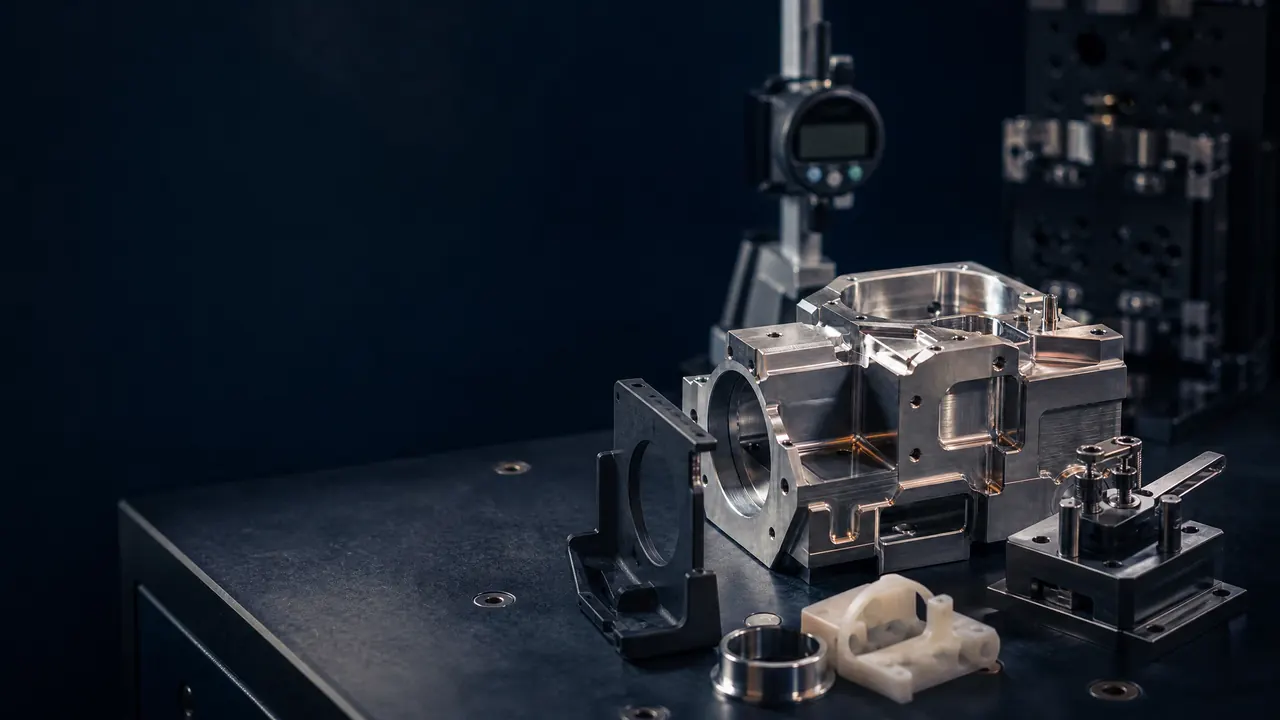
Development parts
PartVerity helps choose a prototype route around geometry, material behaviour, tolerance, appearance, quantity and the decision the prototype must support.
Process control
The right rapid-prototyping process depends on the question the part must answer. We compare routes against fit, strength, appearance, material intent, timing and the expected next design decision.
Prototype objective definition
CAD and drawing review
Process and material comparison
Manufacturability closure
Prototype manufacture and checks
Delivery with observations for the next revision
Materials
The examples below indicate common project families, not permission to substitute a specified grade. Availability, origin, certification and traceability requirements are confirmed in the quotation basis.
Machinable aluminium, steel and selected alloys
Machined or additively manufactured polymers
Resins and nylon-based prototype materials
Project-specific alternatives identified before approval
Tolerance approach
CNC prototype tolerances follow the same feature-by-feature review as machined production parts. Additive, cast and fabricated prototypes use process-specific capability. Critical dimensions, fit checks and cosmetic expectations must be identified so the correct route and inspection level can be selected.
Lead-time planning
Many straightforward prototype projects can be planned from approximately 5–15 business days after technical closure. Size, material, finishing, inspection, iteration cycles and international delivery influence the committed date.
Manufacturing in China
Rapid prototyping in China is most effective when the manufacturing process is selected around the next engineering decision rather than speed alone. A visual model, a functional assembly check and a production-intent prototype require different materials, tolerances and evidence.
PartVerity coordinates CNC prototypes, polymer additive parts, fabricated prototypes and other appropriate routes through one technical intake. Any material substitute is identified before approval and is not represented as production-equivalent without supporting evidence.
Final capability, tolerance, material documentation, inspection scope and timing are confirmed per drawing and project—not by website copy alone.
Decision-stage engineering
Each gate connects the accepted requirement to a named reviewer, a project record and an explicit decision. These controls describe the coordination model; the project quotation defines the actual scope.
Confirm the drawing/model revision, material or resin identity, quantity, finish, delivery basis and open technical dispositions before manufacturing release.
Identify the characteristics that drive fit, function, appearance or assembly and agree how, when and by whom their evidence will be reviewed.
Keep DFM proposals, substitutions, deviations, rework and schedule effects attached to a numbered request and authorised response.
Rapid-prototyping & NPI resources
Use these focused guides to close process selection, functional validation, production-intent limits, iteration control and bridge-production decisions. Each resource returns to this commercial owner and a rapid-prototyping RFQ route.
Frequently asked questions
Answers state the coordination basis without promising universal capability, timing or acceptance.
The route is compared against the decision the build must support: geometry, material behaviour, tolerance, appearance, quantity, timing and required evidence. The fastest process is not automatically the most informative.
No. Prototype evidence applies to the identified sample, revision, material, process and test conditions. Production material, tooling, process capability and control still require their own release basis.
Each build should retain revision authority, build identity, process and material record, issue log, approved changes and the conclusion transferred to the next revision or bridge-production decision.
Start a controlled RFQ